Klondike Solitaire Trip
- 4.9
- Rating
- 100.00K
- Installs
- Free
- Price
 Analysis by App-foxy
Klondike Solitaire Trip is the kind of card game I open when I want something familiar, quiet, and easy to understand without spending time learning a complicated system. It presents Klondike Solitaire as a small traveling escape, pairing the classic card layout with a lighter adventure mood. After playing it, my impression is that its strongest quality is not reinvention; it is the way the familiar rules make the game immediately approachable while the travel theme gives each short session a little more personality.
That makes it a good fit for a coffee break, a commute, or the few minutes before bed. I can start a deal quickly, think through a few moves, and stop without feeling that I have abandoned a large campaign. At the same time, players looking for deep strategy, a story-driven journey, or a highly competitive card experience should keep their expectations realistic. This is primarily a Klondike Solitaire game, and its appeal depends on how much you enjoy refining decisions inside that classic format.
A calm card trip built around familiar decisions
I find the appeal here less about reaching a dramatic destination and more about having a familiar puzzle that feels pleasant to revisit. That makes it worth judging by how well its travel mood stays out of the way of the cards, and by whether its small decisions hold my attention beyond the first deal. Next, I look at the practical habits that make those decisions more rewarding.
You May Also Like

 Blood Strike: 2.5 Anniversary
Blood Strike’s Loadouts Turn Every Drop Into a Tactical Gamble
A close look at Blood Strike’s custom loadouts: how fast access to signature weapons reshapes its battle royale rhythm, rewards preparation, and narrows the gap between fights.

 Pandora - Music & Podcasts
Pandora’s Music Is Easy to Start, but Harder to Recover
Pandora’s strength is its low-effort path from a seed to a station. Its weak spot is how much confidence it asks you to place in connection, setup, and quiet recovery.

 8 Ball Pool
 Is Built on Rivalries, Rematches, and Routine
A close look at the rivalries, rematches, shared routines, and unanswered safety questions that turn a quick pool match into a persistent mobile community.

 Samsung Music
’s Quiet Strength Is Playing What You Already Own
Its reach comes less from spectacle than from dependable access to a personal library. That simplicity is both the app’s strongest retention engine and its ceiling.

 AccuWeather: Weather Radar
AccuWeather Review: A Quick, Clear Forecast for Everyday Decisions
For everyday plans, the best forecast is the one you can understand quickly. AccuWeather makes rain timing, radar, and local conditions easy to act on, with a few trade-offs.

 Hill Climb Racing
Why Hill Climb Racing Still Turns Crashes Into One More Run
A tiny car, a bumpy hill and one more upgrade: Hill Climb Racing keeps resurfacing because its simple chaos makes every near-miss feel personal.
More From Our News Desk
View All News


The first impression: approachable, focused, and easy to return to
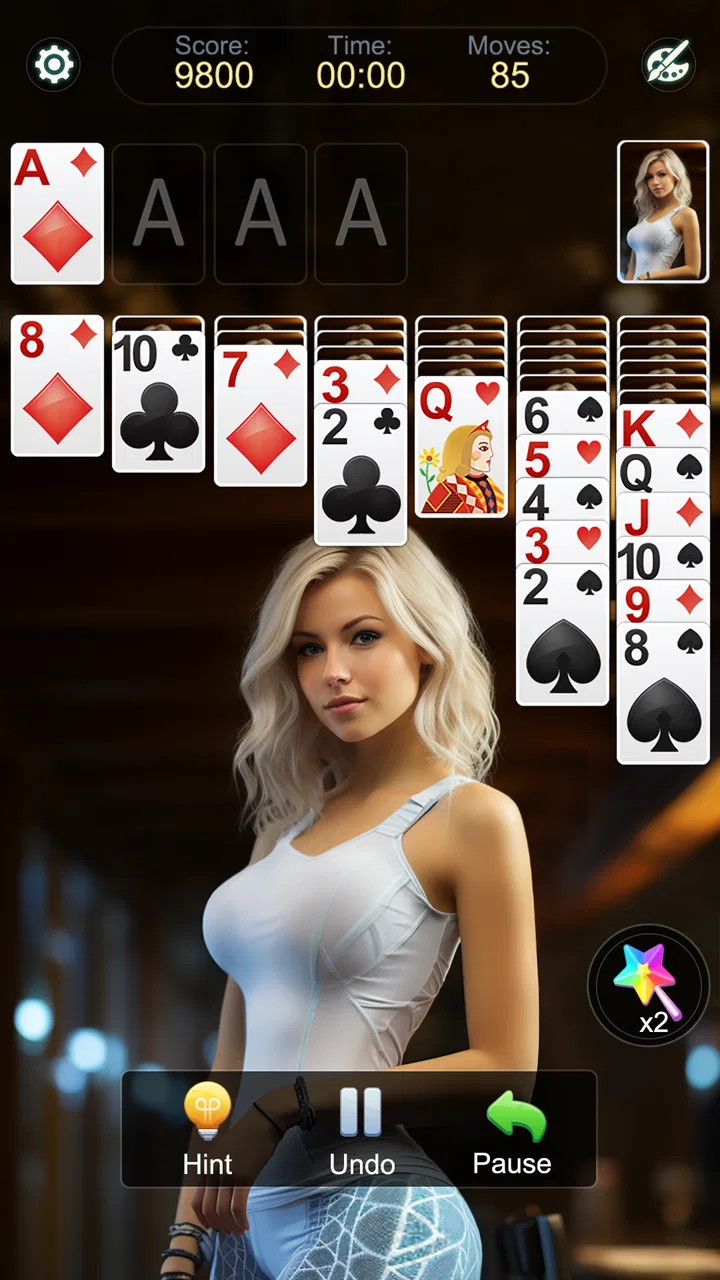
The first thing I noticed is how little friction there is between opening the game and beginning a round. The central activity is instantly recognizable: cards are arranged in the traditional Klondike structure, and the goal is to build the foundations by suit while managing the tableau. That familiarity matters. I did not need a tutorial-heavy introduction or a long explanation before I could make useful decisions.
The travel framing gives the experience a more inviting identity than a completely plain solitaire board. Rather than making the game feel like a spreadsheet of cards, it suggests movement and discovery around the act of playing. I would not choose it primarily for a dramatic narrative, but the setting helps the short sessions feel connected to a broader mood. It is a gentle layer over the card game instead of a distraction from it.
The game is free, which makes it simple to try without treating the download as a major commitment. It is listed for everyone, so its presentation is suitable for a broad audience, including people who want a straightforward puzzle for occasional use. Lynn Mobile Puzzle Games is the developer, and the current version is 1.3.0. It works with Android 6.0 or later, which also makes it accessible on many older devices rather than limiting it to recent phones.
Its reception suggests that the basic formula is connecting with players: it holds an average rating of 4.9 from around 1.2 thousand ratings and has passed 100 thousand installs. I would still treat those figures as a sign of broad approval rather than a substitute for personal taste. Solitaire is unusually dependent on preferred card layouts, visual style, and tolerance for repetition. A high rating cannot change the fact that some players will find the core loop too familiar.
The visual language: travel as a soft frame for the cards
The most successful artistic choice is the contrast between a recognizable card table and the idea of a journey. The cards remain the practical focus, while the surrounding presentation gives the session a destination-oriented feel. That balance is important: if the scenery became too busy, it would compete with the symbols and ranks that need to be read quickly. Here, the travel idea works best when it stays in the background and lets the layout remain clear.
I like this approach because it gives the game a sense of place without asking me to manage a separate adventure system. The setting acts almost like a mental transition. Opening the game feels less like checking a utility and more like taking a short break from whatever I was doing. That is a small effect, but it matters in a genre where many alternatives can look and feel interchangeable.
The art direction also supports the idea of casual brain training. Klondike is not about reflexes; it is about noticing available moves, protecting useful cards, and deciding when to expose hidden cards or move cards to the foundations. A calm visual environment helps those decisions stay readable. I found that the theme works when it encourages me to slow down rather than rush through every available move.
One practical tip is to judge the presentation during a longer session, not only during the opening minute. A decorative travel mood can be attractive at first but tiring if it makes the board harder to scan. For me, the important question is whether I can quickly locate the exposed cards, the stock, the waste pile, and the foundation areas. If you prefer an extremely stripped-down solitaire interface, the themed surroundings may feel less efficient than a minimalist alternative.
Sound and rhythm: why the short-session structure works
The game’s mood depends as much on pacing as on its setting. Klondike naturally creates a stop-and-start rhythm: I inspect the layout, make a move, pause to reassess, and then decide whether to draw or rearrange the tableau. That rhythm is more relaxing than an action game’s constant demand for speed, and it suits the idea of a small trip taken one decision at a time.
I see the sound design as supporting that rhythm rather than trying to dominate it. In a solitaire game, audio should make actions feel finished without turning every card movement into an interruption. The best use of sound here is as a quiet confirmation that a card has moved, a sequence has advanced, or a round has reached its conclusion. Players who prefer complete silence can still approach the game as a visual puzzle, while those who enjoy a little feedback can let the atmosphere make the session feel more complete.
The pacing is especially useful in everyday situations. I could imagine playing a round while waiting for an appointment, taking a break between tasks, or settling down after a busy day. The game does not require a large uninterrupted block of time to make sense. A player can think carefully for a few minutes and pause when necessary, which is one reason solitaire remains more practical than many larger puzzle adventures.
There is also a trade-off. A relaxed rhythm can become repetitive if the player wants constant novelty. The travel mood may soften that repetition, but it cannot remove the underlying structure: you are still solving variations of the same card problem. If you need changing objectives, character progression, or increasingly dramatic challenges to stay interested, this experience may feel too even-tempered.
Where the mechanics and the theme fit together
The central mechanics are the reason to play. In Klondike, every move can affect several future possibilities. Moving a visible card may uncover a hidden card, but it can also occupy a useful space or prevent a longer sequence from being built. Sending a card to the foundation can feel immediately correct, yet holding it in the tableau may sometimes preserve flexibility. Those small trade-offs are what give the game its brain-training quality.
My most useful habit is to avoid automatically making the first legal move I see. I first check whether moving a card will reveal something hidden, whether it creates an empty tableau column that can accept a king, and whether it blocks a sequence I may need later. This is a simple change in approach, but it makes the game feel more thoughtful. The travel setting then becomes a backdrop for deliberate progress rather than decoration placed around random taps.
Another practical tip is to treat the stock as a resource rather than a button to press whenever the tableau looks inconvenient. Before drawing, I scan the open cards and consider whether a different tableau arrangement could expose a better option. This is especially helpful for players who already know basic solitaire rules but want to improve their consistency. The game rewards patience more than frantic experimentation.
I also recommend separating “safe” moves from “useful” moves. A card may be legally movable without improving the position. For example, shifting a sequence can preserve the same information while using a space that might later be needed for a more valuable arrangement. I found that the most satisfying rounds came from planning two or three consequences ahead instead of simply clearing whatever was currently visible.
That is where the game’s mechanical fit is strongest. The calm atmosphere does not replace strategy; it gives strategy room to breathe. The setting encourages a slower pace, and the Klondike rules provide enough decision-making to make that pace worthwhile. It is not a complex card battler, but it is more engaging than a purely automatic matching activity because each layout asks me to balance immediate progress against future flexibility.
Who will enjoy it, and who should choose something else?
I would recommend Klondike Solitaire Trip to someone who wants a familiar card game with a little more character than a bare digital deck. It suits beginners because the rules are widely known and the board is easy to understand. It also works for experienced solitaire players who enjoy short rounds and want a softer presentation instead of a highly competitive environment.
It is particularly useful for people who want a low-pressure way to occupy small gaps in the day. A short session can provide light mental exercise without requiring the commitment of a full puzzle campaign. I can also see it appealing to players who like travel-themed presentation but do not want to learn a new game system every time they open an app.
I would skip it if your priority is multiplayer competition, elaborate deck-building, or a strong narrative with characters and plot. A dedicated strategy card game will offer more varied systems, while a story adventure will provide more meaningful progression and world development. Likewise, players who want a completely customizable solitaire tool may prefer a specialized alternative built around visual settings and rule variations rather than a themed trip.
Compared with a physical deck, the app is more convenient because it handles setup and keeps the session ready whenever I have my phone nearby. Compared with a plain solitaire utility, it has a stronger sense of atmosphere. Compared with a broader collection of card games, however, its focus is narrower. That narrowness is a benefit when I want Klondike specifically, but it can feel limiting if I expect several different games in one download.
Small decisions that make daily play better
For a more reliable routine, I would use the game in three different ways. During a very short break, I would play quickly but still pause before drawing from the stock. During a longer session, I would deliberately examine alternative moves and use the round as a concentration exercise. When playing late at night, I would treat the gentle pace as the main attraction and avoid turning a relaxing game into a test of perfect efficiency.
Players new to Klondike should focus first on uncovering hidden cards. Exposing information usually creates more possibilities than immediately building a foundation. Once several hidden cards are available, it becomes easier to judge which sequences deserve space and which cards should remain temporarily where they are. This approach reduces the common mistake of sending every eligible card upward too early.
Experienced players can use the travel theme as a cue to play more patiently. Instead of measuring success only by whether a round is completed, I would pay attention to how often I preserve options and avoid unnecessary reversals. That mindset makes the game feel less like repetitive tapping and more like a compact planning exercise.
The main friction is the same quality that makes the game accessible: the rules are familiar. There is no guarantee that the theme alone will keep the experience fresh after many sessions. Some deals will feel satisfying, while others may seem constrained by the order of the cards. That is not a flaw unique to this title, but it is worth recognizing before choosing it as a primary game rather than an occasional one.
The atmosphere verdict: a pleasant companion for classic solitaire
After spending time with it, I see Klondike Solitaire Trip as a mood-focused version of a dependable card pastime. Its art direction gives the board a sense of travel, its rhythm fits short reflective sessions, and its mechanics remain clear enough for both newcomers and longtime solitaire players. The presentation works because it does not need to compete with the cards; it simply makes the familiar activity feel more inviting.
The game is free and rated for everyone, so it is easy to recommend as a low-commitment download for casual play. Its broad device compatibility is another practical advantage for people using older Android hardware. I would not describe it as a replacement for a deep card strategy game or a full adventure title, but that is not where its value lies.
My honest recommendation is to try it if you want classic Klondike wrapped in a calm travel mood. It is at its best when used as a small daily escape: open it, study the layout, make a few careful choices, and let the round provide a quiet sense of progress. If that restrained rhythm sounds appealing, this game has enough atmosphere to stand apart from a plain solitaire board while keeping the mechanics familiar. If you need constant novelty or a larger collection of systems, a different card app will probably serve you better.
For me, the balance is convincing. The journey is not the destination; the card decisions are. But the setting, sound, and measured pace make those decisions more pleasant to revisit, which is exactly what a good casual solitaire game should do.
FAQs for Klondike Solitaire Trip
01What makes Klondike Solitaire Trip different from other solitaire apps?
Klondike Solitaire Trip offers a unique blend of classic solitaire gameplay with modern design elements. Unlike many traditional solitaire apps, it features a variety of themes and backgrounds, providing a visually appealing experience. Additionally, it includes daily challenges and achievements to keep players engaged and motivated.
02Are there any in-app purchases or ads in Klondike Solitaire Trip?
Yes, Klondike Solitaire Trip is free to download, but it includes in-app purchases for premium features like ad removal and exclusive themes. While the app does contain ads, they are strategically placed to minimize disruption during gameplay. Users can opt to purchase the ad-free version if they prefer an uninterrupted experience.
03Can I play Klondike Solitaire Trip offline?
Absolutely! Klondike Solitaire Trip can be played offline, making it an excellent choice for users who want a fun distraction while on the go without relying on an internet connection. However, features like daily challenges and leaderboards require an internet connection to update and sync progress.
04Is Klondike Solitaire Trip suitable for all ages?
Yes, Klondike Solitaire Trip is designed to be family-friendly and suitable for players of all ages. Its simple rules and intuitive interface make it accessible for children, while the strategic elements ensure that it remains challenging and engaging for adults. Parental guidance is recommended for in-app purchases.
05How does the scoring system work in Klondike Solitaire Trip?
The scoring system in Klondike Solitaire Trip follows the traditional rules of solitaire, where points are awarded for moves like turning over cards and moving cards to the foundation piles. Bonuses are available for completing games quickly and efficiently. Players can compete for high scores on the leaderboard to challenge friends or improve personal records.
Pros
- Simple
- intuitive interface for easy navigation.
- Variety of card themes to customize your game.
- Smooth animations enhance the gameplay experience.
- Offline mode available for uninterrupted play.
- Daily challenges keep the game engaging.
Cons
- Ad interruptions can be frequent and disruptive.
- Limited hints available without in-app purchases.
- No multiplayer mode for social play.
- Battery consumption can be relatively high.
- Lacks variety in game modes beyond Klondike.

Klondike Solitaire Trip
Gallery